

The Adoption of AI Creates New Vectors of Exposure for Critical Data
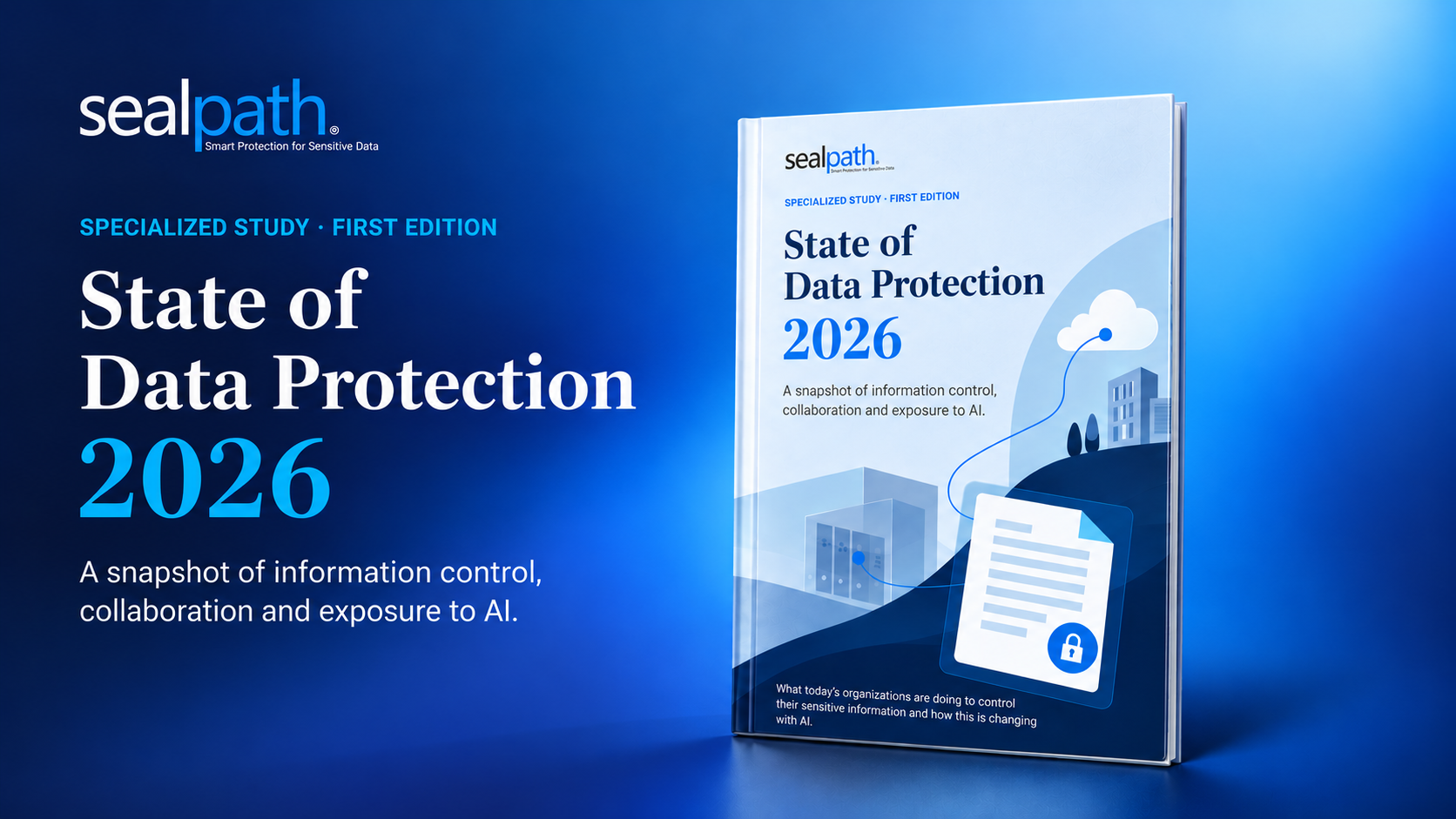
Report State of data protection 2026
SealPath releases a report, “State of Data Protection 2026,” that reveals how organizations continue to struggle to protect information.
BILBAO, VIZCAYA, SPAIN, October 20, 2026 /EINPresswire.com/ -- - SealPath releases a report on the “State of Data Protection 2026” that reveals how organizations continue to struggle to protect information once it leaves their perimeter, and even more so now with the advent of artificial intelligence.
- Although 85% of respondents report applying the principle of least privilege, only 36% can modify a document’s permissions after it has been sent.
- The study also analyzes the exposure of sensitive information in AI tools and notes that 48% of respondents confirm that sensitive information has been entered into AI tools, while another 20% suspect that this has occurred.
Organizations have made progress in managing who can access information, but maintaining control over it when it is shared with third parties, downloaded, or used outside of standard environments remains a challenge. This is one of the main conclusions of the first 2026 State of Data Protection Report, prepared by SealPath based on a study targeting CISOs and security and technology professionals.
The report is being published at a time of growth and international expansion for SealPath. During the first three quarters of 2026, the company increased its business by more than 20% in markets such as Europe and Asia, strengthening its international presence.
The results reveal a gap between access management and the control of information once it has been shared. Although 85% of participants report applying the principle of least privilege, only 36% say they can modify a document’s permissions after sending it via . Furthermore, only 21% report having persistent protection that accompanies the file as it changes locations.
Collaboration and AI Expand Exposure Scenarios
Collaboration with third parties is common, as confirmed by this report, in which 72% of participants state that they share sensitive information with other organizations at least occasionally. However, only 46% report being able to revoke access to shared information, and 32% can audit third-party access.
The adoption of artificial intelligence adds new avenues of exposure. 48% confirm that sensitive information has been entered into AI tools, and another 20% suspect this has occurred. Even so, only 41% say they have complete visibility into the AI tools used in their organization. Entering information into an AI tool does not in itself constitute an incident: its impact depends on the destination and whether that use is authorized.
The study also shows that having technology does not always translate into a high perception of effectiveness. 91% report having at least one protection technology, but only 42% rate its overall effectiveness as fairly or very high. Regarding AI, 59% say their controls do not prevent the exposure of sensitive information or only partially do so.
Protecting Information Beyond the Perimeter
“We are sharing more and more sensitive information with more people, through more channels, and using more tools. Artificial Intelligence has further expanded the channels through which this information can flow, increasing exposure to risk when adequate controls are lacking. That’s why protecting information cannot be limited to controlling who accesses it within the organization: it’s essential that protection accompanies the document wherever it goes,” says Luis Ángel del Valle, CEO of SealPath.
The report “State of Data Protection 2026” provides an overview of the practices reported by participating professionals and analyzes the challenges associated with information control, collaboration with third parties, and the use of AI. The fieldwork was conducted in July and August 2026. This is an exploratory study based on self-reported responses; therefore, its results are not intended to be statistically representative of the entire market.
About SealPath
SealPath is a European company specializing in data-centric security, with over a decade of experience helping organizations protect their sensitive information. It operates in more than 30 countries and serves leading companies across various sectors, including Euro Stoxx 50 and Fortune 500 organizations. Millions of documents are protected every day using its technology. Its solution combines encryption, permissions, and traceability for protected documents to help maintain control over information when it is shared within or outside the organization.
Jon Ander González
Sealpath Technologies
marketing@sealpath.com
Visit us on social media:
LinkedIn
Legal Disclaimer:
EIN Presswire provides this news content "as is" without warranty of any kind. We do not accept any responsibility or liability for the accuracy, content, images, videos, licenses, completeness, legality, or reliability of the information contained in this article. If you have any complaints or copyright issues related to this article, kindly contact the author above.
